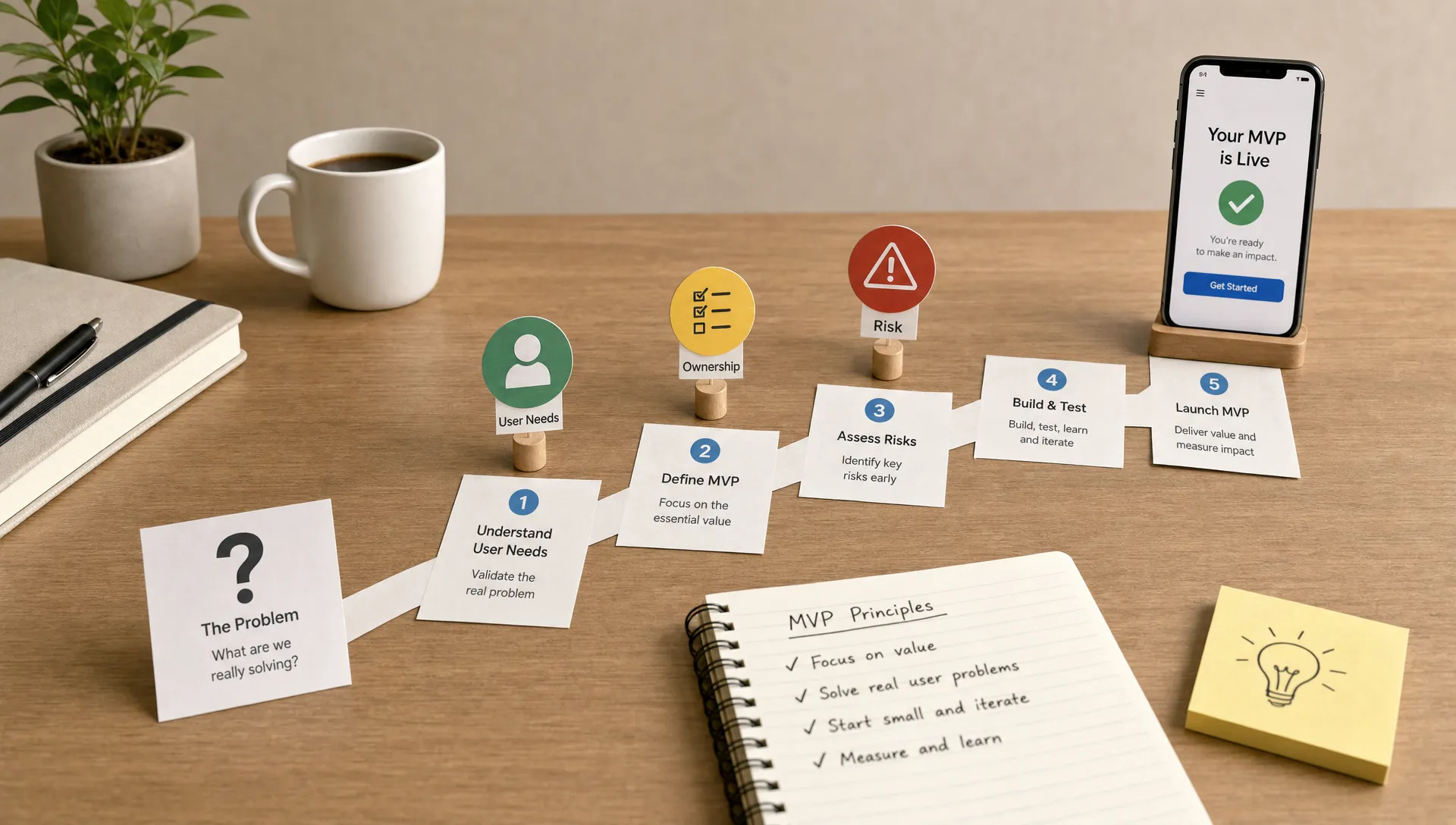

When you hire an iOS developer, the first conversation should not start with code. It should start with risk, users, timing, ownership and what the app must prove in its first version.
That matters even more if you are a non-technical founder, a local service business moving away from paper processes, a healthcare team handling sensitive data or an early-stage startup trying to launch an MVP before cash runs thin. The developer you choose will influence more than screens and buttons. They will shape what gets built, what gets postponed and whether the product is maintainable after launch.
A good iOS developer will ask you hard questions. You should be ready to ask your own.
Before you discuss code, clarify the outcome
The strongest question to ask before hiring is simple: what does this app need to accomplish?
Many app projects start with a feature list, but a feature list does not explain the business case. A booking app, field service app, fitness app or healthcare intake tool can all look straightforward until you define the exact workflow users must complete. Without that clarity, development becomes a guessing exercise.
Ask yourself and the developer these questions before scope or pricing:
- What business result should the first version create?
- Who is the primary user for version one?
- What problem are they solving today, and how are they solving it without the app?
- What action should users complete in the first session?
- What would make the MVP successful 30 days after launch?
For example, a contractor may think they need a full customer portal, quote builder, invoice tracker and technician scheduling tool. The actual MVP might be a simple job intake and status update app that removes phone calls from daily operations. That smaller outcome is easier to build, test and improve.
This is also where a developer’s product thinking shows. If they only respond with yes to every idea, you may end up paying for complexity before you know what users actually need.
Product strategy questions to ask an iOS developer
Should this be native iOS, iOS first, or cross-platform?
Hiring an iOS developer does not always mean the app must be native iOS forever. For some products, native Swift development is the right choice because the app depends heavily on Apple-specific features, polished performance or deep integration with iPhone capabilities.
For other MVPs, especially when customers use both iPhone and Android, a cross-platform approach can help you move faster with one shared codebase. If this is a serious option, it is worth understanding when a Flutter mobile app is the right choice before you commit to native iOS only.
Useful questions include:
- Do we need iOS only for the MVP, or both iOS and Android?
- Which Apple features are essential for this product?
- What tradeoffs come with cross-platform development for this app?
- If we launch on iOS first, how difficult will Android be later?
- Will the backend, design system and data model support future platforms?
There is no universal answer. A consumer fitness app targeting iPhone users may benefit from native iOS polish. A field operations tool for staff using mixed devices may be better suited to cross-platform development from day one.
How will the app meet Apple’s expectations?
The App Store is not just a distribution channel. It has rules, design expectations and privacy requirements that can affect your timeline.
Apple publishes its Human Interface Guidelines and App Review Guidelines publicly. You do not need to memorize them, but your developer should understand the parts that apply to your app.
Ask:
- Which App Store rules could affect our product?
- What permissions will the app request, and why?
- Could any feature increase review risk?
- What needs to be ready before submission?
- Who will manage the Apple Developer account and App Store Connect setup?
This is especially important for apps involving user-generated content, payments, subscriptions, health data, location tracking or account deletion. App review delays are frustrating, but many are avoidable when the product is planned with Apple’s rules in mind.
MVP scope questions that prevent expensive rework
A 4-6 week MVP is realistic only when the first version has one clear job. If the project includes admin dashboards, notifications, payments, analytics, account roles, offline sync and multiple integrations from the start, the timeline will expand quickly.
The point is not to build less forever. The point is to build the smallest version that can prove demand, reduce an operational pain or create a usable customer experience.
| Vague request | Better question | What it reveals |
|---|---|---|
| Can you build an app like Uber? | Which single user flow matters most in version one? | Whether the idea can be reduced to a shippable MVP |
| Can we add payments, chat and notifications? | Which feature is required for the first successful transaction? | Whether features are essential or nice to have |
| Can it have an admin panel? | What exact tasks must an admin complete on day one? | Whether a full dashboard is needed immediately |
| Can we launch fast? | What can we safely launch in 4-6 weeks? | Whether timeline and scope are aligned |
| Can users sign up with everything? | What is the simplest account flow users will accept? | Whether onboarding is being overbuilt |
If you have not validated the app idea yet, spend time on the user problem before the build. A practical guide on building a mobile app that users want can help you define the right first version before development starts.
Questions about technical quality and ownership
Clean code matters because your first developer may not be your last developer. Even if you work with the same person long term, messy architecture makes every future feature slower and riskier.
Non-technical founders often struggle to judge code quality directly, so ask questions about process, ownership and handoff.
| Area | Questions to ask before you start |
|---|---|
| Code ownership | Will the code live in a repository I control or have access to? |
| App ownership | Will the app be published under my Apple Developer account? |
| Architecture | How will the app be structured so future features are easier to add? |
| Documentation | What setup notes or handoff documentation will be provided? |
| Testing | What parts of the app will be manually or automatically tested before launch? |
| Dependencies | Which third-party tools will the app rely on, and what happens if they change pricing? |
| Backend | Who owns the database, hosting account and API access? |
You do not need the developer to give a lecture on architecture. You do need them to explain their choices in plain language. A trustworthy developer should be able to tell you what they are optimizing for, what they are avoiding and what future tradeoffs you should understand.
A simple ownership rule helps: your business should control the accounts, repositories and assets that are critical to the product. The developer can manage setup and implementation, but the core business property should not be trapped in someone else’s account.
Questions about data, privacy and compliance
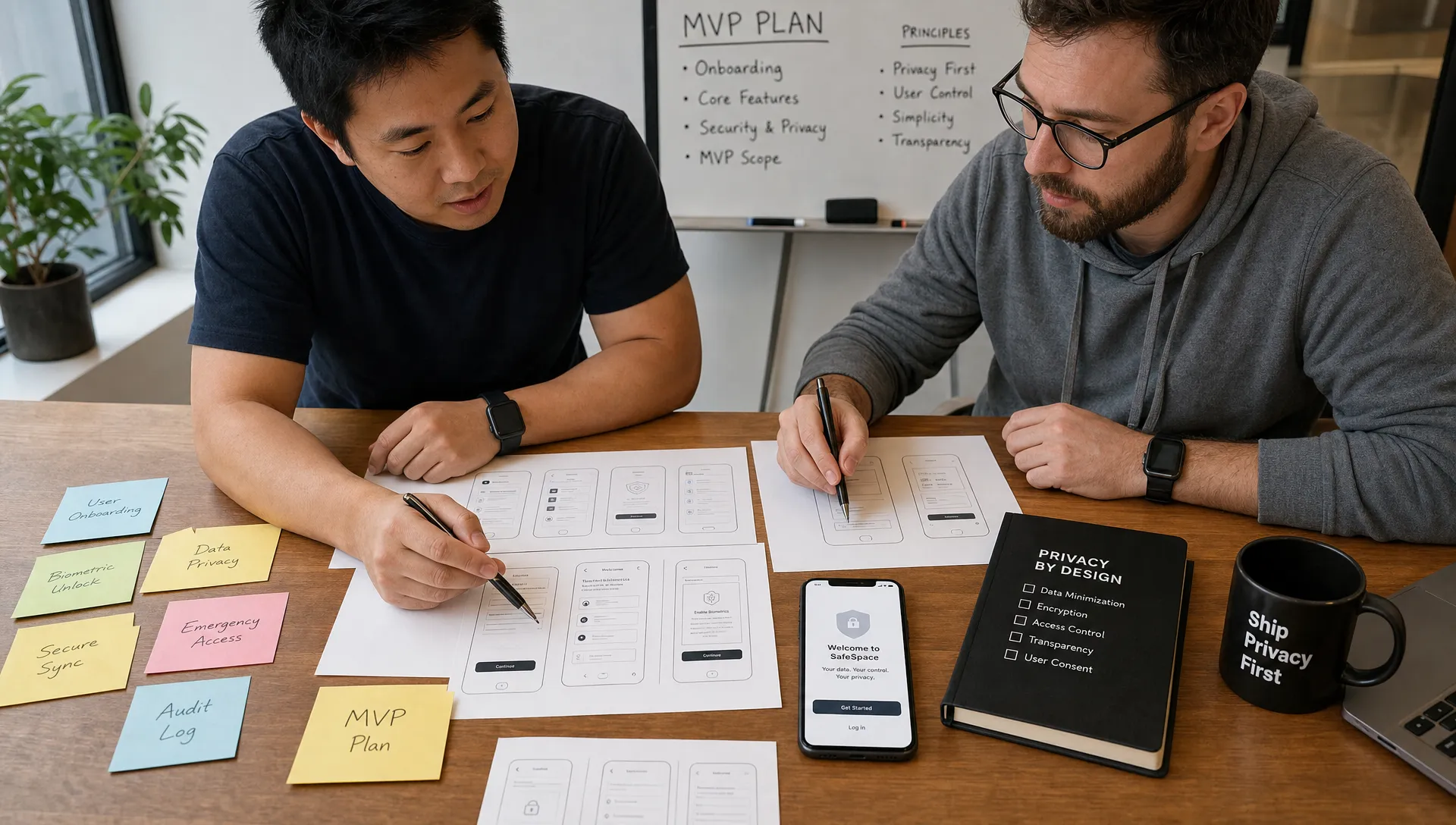
Privacy cannot be added at the end of a mobile app project. The decisions you make about data collection, storage, permissions and account deletion affect the whole build.
For healthcare apps, the stakes are higher. HIPAA applies to covered entities and business associates, as described by the U.S. Department of Health and Human Services. GDPR may apply when handling personal data from people in the EU, and the European Commission’s data protection overview explains the broader framework.
A developer alone cannot declare your product HIPAA compliant or GDPR compliant. Compliance usually involves legal review, vendor review, operational policies and security decisions. The developer’s role is to build the app in a way that supports those requirements rather than undermining them.
| If your app handles… | Ask before development starts |
|---|---|
| Customer profiles | What personal data do we truly need to collect? |
| Health information | Could this data be protected health information under HIPAA? |
| Location data | Why do we need location access, and can users control it? |
| Payments | Are we using a trusted payment provider rather than storing card data ourselves? |
| Messages or notes | Should sensitive content be encrypted, restricted or deleted after a period? |
| EU user data | How will consent, deletion requests and data access requests be handled? |
Apple also requires app privacy information in App Store submissions. Its app privacy details documentation is worth reviewing before launch because the answers should match what the app actually collects.
User experience questions that reveal product maturity
A reliable iOS developer should care about how people will actually use the app. This is especially important for small businesses replacing spreadsheets, paper forms or manual phone calls. The users may not want another tool. They want less friction.
Ask how the developer thinks about onboarding, empty states, loading states, error messages and repeat usage. These details sound small, but they often decide whether people keep using the product after the first day.
Good questions include:
- What is the simplest path from opening the app to completing the main action?
- Where are users most likely to get confused?
- What should happen if the internet connection is poor?
- How will the app explain errors in plain language?
- What should users see before they have added any data?
- Which features should be hidden until users actually need them?
For example, a study app does not need every learning mode at launch. It may need a fast way to turn notes into practice questions. A field service app does not need complex reporting first. It may need a technician to view today’s jobs and mark work complete without calling the office.
The best user experience is often the one that removes decisions.
Budget and timeline questions to ask before signing
Budget conversations are uncomfortable when scope is fuzzy. Instead of asking only for a price, ask what the price assumes.
If you are early in budgeting, review what founders should know about iOS app development costs so you can compare estimates with more context.
| Budget topic | Question to ask | Why it matters |
|---|---|---|
| Discovery | Is planning included, or do we need a separate scope phase? | Prevents rushed assumptions |
| Design | Are app screens included, or do I need a designer first? | Avoids gaps between idea and build |
| Backend | Does the estimate include database and API work? | Many mobile apps need more than front-end screens |
| Integrations | Which third-party services are included in the quote? | Integrations can add time and risk |
| App Store launch | Is submission support included? | Launch work is often forgotten |
| Revisions | How many feedback rounds are included? | Keeps changes from becoming open-ended |
| Maintenance | What happens after the first version goes live? | Apps need updates, bug fixes and platform support |
A low estimate is not automatically a bargain. Sometimes it means the developer has misunderstood the scope or excluded important work. A higher estimate is not automatically better either. You are looking for clear assumptions, realistic milestones and a plan that matches your current stage.
Ask for milestones tied to working software. For an MVP, that might mean clickable designs, core user flow, backend integration, test build, launch preparation and App Store submission. The exact milestones will vary, but you should not wait until the final week to see the app working.
Communication questions that reduce project risk
Communication is not a soft skill in app development. It is how you control risk.
A founder who sees regular builds can catch misunderstandings early. A business owner who gets concise progress updates can make decisions without chasing the developer. A healthcare team can flag privacy concerns before sensitive workflows are already built.
Ask:
- How often will I see a working build?
- What do you need from me each week to keep the project moving?
- How will we track tasks, decisions and changes?
- What happens if I request a new feature mid-project?
- How do you handle bugs found during testing?
- Who is responsible for writing App Store descriptions, privacy answers and support information?
You should also ask how the developer prefers to work. Some developers are strongest when given detailed wireframes. Others can help define product flows from scratch. Neither is wrong, but the working style must fit your needs.
If you are non-technical, look for someone who explains tradeoffs without making you feel lost. You do not need to understand every implementation detail. You do need to understand the decisions that affect cost, timeline and launch quality.
Red flags when you hire an iOS developer
The wrong developer can cost more through delays and rework than through the original invoice. Watch for warning signs before the contract starts.
- They give a fixed quote before asking about users, data, integrations or launch requirements.
- They say every feature is easy without explaining tradeoffs.
- They avoid discussing code ownership, accounts or handoff.
- They cannot explain how App Store submission will work.
- They ignore privacy questions or say compliance can be handled later.
- They push for a large feature set before defining the MVP.
- They do not plan demos, test builds or feedback checkpoints.
- They cannot describe what happens after launch.
For a broader view of hiring risk, the guide on how to hire a mobile app developer without costly mistakes covers common decisions that apply beyond iOS projects.
What to prepare before your first call
You do not need a full technical specification before talking to a developer. In fact, a good developer can often help you shape the app. But you should bring enough context to make the conversation productive.
Prepare:
- A one-paragraph description of the problem.
- The main user group for version one.
- The top three actions users must complete.
- Any existing tools, spreadsheets or workflows the app will replace.
- Examples of apps you like and what you like about them.
- Data types the app will collect, especially health, payment, location or customer information.
- Your target launch window.
- A realistic budget range if you have one.
- Any must-have integrations such as scheduling, payments, CRM or internal systems.
This preparation helps the developer give better advice. It also helps you compare developers fairly because each person is responding to the same project context.
Ready to ask the right questions before you build?
If you are planning an iOS app and want a practical discussion before writing code, I help founders and small businesses shape MVPs, choose the right platform approach and build clean mobile products quickly.
You can book a consultation call to discuss what is realistic for your first version, what can fit into an MVP and which questions matter most for your app before development starts.